
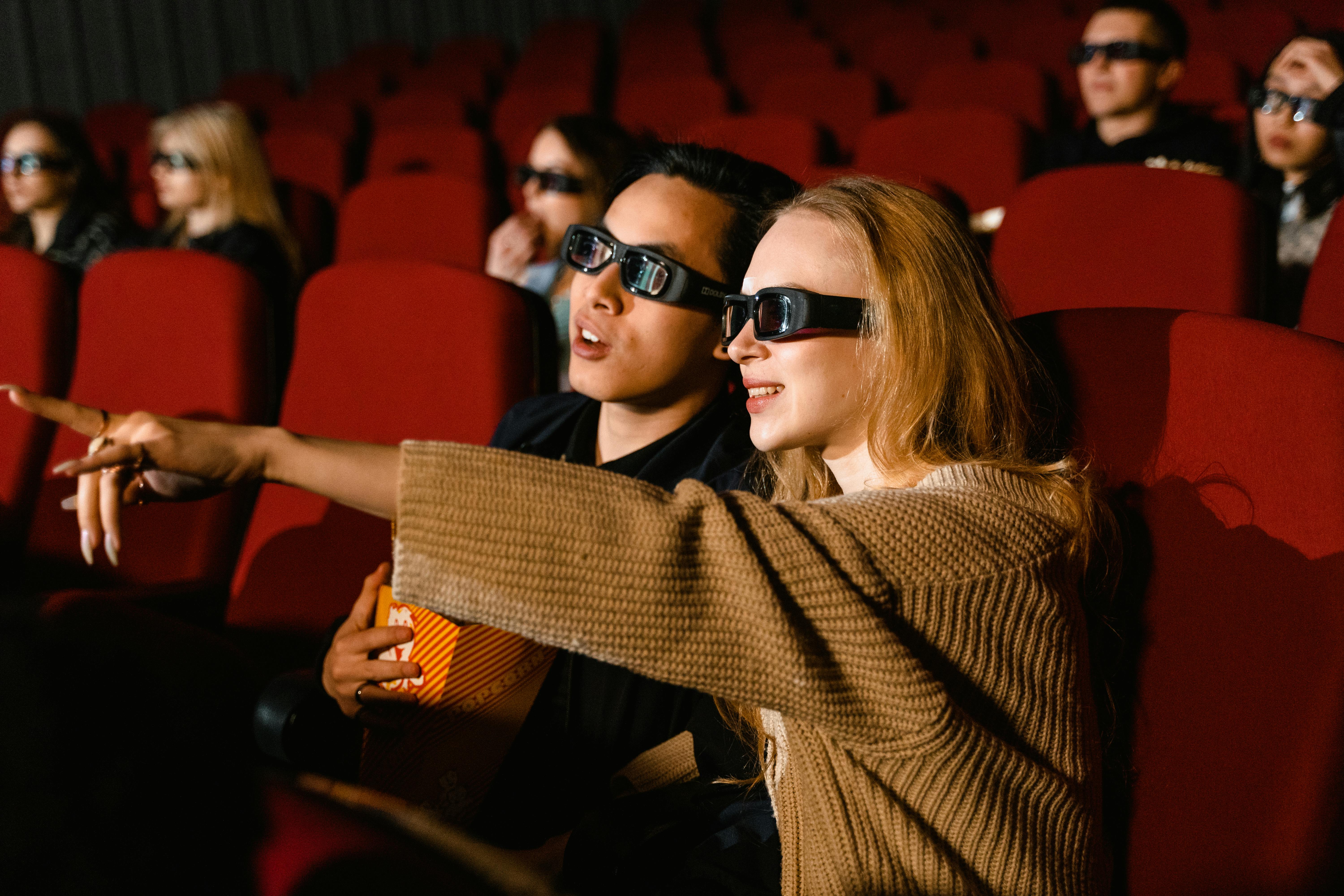
The year is 2026, and the cinematic landscape has been irrevocably transformed by Artificial Intelligence and Virtual Reality. This in-depth guide explores the revolution in film production and consumption, revealing how AI-driven storytelling, hyper-realistic VFX, and immersive VR experiences are creating a new era of entertainment. Discover the best VR headsets for movies, top AI film production tools, and ultimate home cinema upgrades to elevate your viewing experience, comparing leading options and services for the savvy consumer with purchasing intent. Don't just watch movies; live them!
Introduction to the Topic
Welcome to 2026, where the silver screen is no longer a mere window to another world, but a portal you can step through. The traditional movie-watching experience, once defined by a passive audience in a dark room, has been utterly revolutionized. This isn't just about bigger screens or louder sound systems; it's about a fundamental shift driven by the relentless march of Artificial Intelligence (AI) and the rapidly maturing capabilities of Virtual Reality (VR) and Augmented Reality (AR). From the very genesis of a script to the final, personalized viewing experience, AI is now a co-creator, a master editor, and a content curator. Simultaneously, VR and AR are transforming how we consume stories, pulling us into fully immersive worlds where we are not just spectators, but active participants. This article delves into this seismic shift, revealing the technologies making it possible, the products you need to embrace it, and the future trends that will continue to redefine entertainment for years to come. Prepare to upgrade your perception of 'movie night' – it's about to get incredibly personal and infinitely more engaging.
Backgrounds & Facts
The journey to 2026 has seen a rapid acceleration in technological integration within the film industry. AI, once relegated to niche algorithmic tasks, now plays a pivotal role across the entire production pipeline. Generative AI models, far beyond their 2023 capabilities, are now routinely used for initial script drafts, character concept generation, and even entire scene pre-visualization. Deepfake technology, matured and ethically regulated, is employed to de-age actors, create historically accurate digital doubles, or even bring beloved deceased stars back to life for new roles, all with unprecedented realism. AI-powered VFX studios can now render hyper-realistic environments and creatures with a fraction of the time and budget previously required, democratizing high-end visual effects for independent filmmakers and major studios alike. Machine learning algorithms analyze audience data to predict box office success, optimize marketing campaigns, and even inform narrative choices to maximize engagement.
On the consumption side, VR and AR have moved beyond niche gaming peripherals to become mainstream entertainment platforms. High-resolution, lightweight VR headsets with vastly improved fields of view and haptic feedback are now standard consumer electronics. Immersive cinema experiences, once a novelty, are now offered by leading streaming services, allowing viewers to step into 360-degree environments or even participate in interactive narratives where their choices directly influence the plot. Spatial audio, once a premium feature, is standard, creating truly three-dimensional soundscapes that enhance immersion. AR overlays are transforming traditional viewing, projecting holographic elements into your living room that interact with the on-screen action. The convergence of these technologies means that a film is no longer a fixed entity; it's a dynamic, personalized experience waiting to unfold around you. The era of passive viewing is over; welcome to the age of active immersion.
Expert Opinion / Analysis
“The lines between creator and consumer have never been blurrier,” states Dr. Elara Vance, lead AI ethicist at ‘CineForge Labs’. “By 2026, AI isn't just a tool; it's an intelligent collaborator. We're seeing generative models co-writing screenplays with human writers, offering narrative suggestions, and even dynamically adjusting dialogue based on real-time emotional feedback during pre-production simulations. This isn't about replacing human creativity, but augmenting it, allowing filmmakers to explore narrative possibilities at speeds previously unimaginable.”
Meanwhile, on the distribution front, Anya Sharma, CEO of 'Veridian VR Entertainment', highlights the shift in audience expectations: “Consumers in 2026 don't just want to watch a story; they want to inhabit it. Our data shows a significant preference for interactive narratives and fully volumetric cinema experiences available on platforms like 'RealityStream' and 'CineVerse'. The demand for high-fidelity VR headsets capable of delivering these experiences is skyrocketing. It’s no longer enough to have a great plot; the audience expects to feel the rain, smell the digital coffee, and genuinely influence the outcome. This has profound implications for how studios budget for and develop content, pushing them towards more modular, branching narratives and highly detailed environmental design for VR integration.”
Industry analyst Mark Jenkins from 'FutureFilm Insights' adds, “The revenue model is also evolving. Beyond traditional streaming subscriptions, we're seeing micro-transactions for personalized story branches, premium haptic feedback modules, and even digital ownership of 'actor avatars' for custom narratives. The entire ecosystem is geared towards deeper engagement and personalized experiences, which translates directly into higher CPMs for platforms that can deliver this level of immersion.” The message is clear: the future of film is interactive, personalized, and powered by intelligent machines.
💰 Best Options in Comparison (VERY IMPORTANT)
To truly embrace the 2026 cinematic revolution, you need the right gear and subscriptions. Here’s a breakdown of the best options for both consuming and even creating next-gen film experiences, designed for users with purchasing intent.
Top VR Headsets for Immersive Movie Watching (2026 Edition)
- Meta Quest 5 Pro: Still a market leader, the Quest 5 Pro (released late 2025) offers unparalleled standalone performance with its custom 'RealityChip 3' processor. Its 4K per eye resolution and advanced haptic controllers make it ideal for immersive cinema. Excellent integration with Meta's own 'Horizon Cinema' and third-party apps like 'Bigscreen Beyond'. Price: $799.
- Sony PlayStation VR3: Designed for seamless integration with the PS5 Pro, the PSVR3 boasts stunning 8K micro-OLED displays and eye-tracking for foveated rendering, delivering incredibly sharp visuals. Its unique 'SenseFlow' haptic feedback in the headset itself adds another layer of immersion. Best for those already in the PlayStation ecosystem. Price: $649.
- Pico Neo 5 Eye: A strong contender in the enterprise and prosumer space, the Neo 5 Eye features a comfortable, balanced design, 5K per eye resolution, and advanced passthrough capabilities for AR cinema experiences. Its open Android-based OS allows for greater flexibility with third-party content. Price: $899.
Leading Immersive Streaming Platforms (2026)
- RealityStream Ultimate: The premium tier of RealityStream offers a vast library of 360-degree films, interactive narratives, and volumetric cinema experiences. Features 'Adaptive Storylines' powered by AI, allowing viewers to make choices that impact the plot. Subscription: $24.99/month.
- CineVerse+ (powered by Disney): Disney's answer to immersive entertainment, CineVerse+ leverages its iconic franchises for AR/VR experiences. From stepping into a Star Wars battle to exploring Pandora, it offers high-quality, family-friendly interactive content. Subscription: $19.99/month.
- VividVision Studios: Specializing in independent and experimental immersive films, VividVision offers a curated collection of cutting-edge VR short films and episodic series. Known for pushing boundaries in interactive storytelling and sensory feedback integration. Subscription: $14.99/month.
AI-Powered Film Production Software for Aspiring Creators (Subscription Models)
- SceneGenius Pro: An all-in-one AI suite for screenwriting, storyboarding, and character design. Generates scene descriptions, dialogue options, and even basic animated pre-visualizations from text prompts. Subscription: $79/month.
- VFXPilot AI: Revolutionizes post-production with AI-driven rotoscoping, object removal, deepfake integration, and automatic color grading. Reduces rendering times significantly. Subscription: $129/month.
Here's a comparison table to help you make an informed purchasing decision:
| Product/Service | Key Feature | Resolution/Content | Price/Subscription | Best For |
|---|---|---|---|---|
| Meta Quest 5 Pro | Standalone, powerful 'RealityChip 3' | 4K per eye, broad app support | $799 (one-time) | General immersive cinema, VR gaming |
| Sony PlayStation VR3 | 8K Micro-OLED, 'SenseFlow' haptics | 8K per eye, PS5 Pro integration | $649 (one-time) | PS5 Pro owners, premium visuals |
| Pico Neo 5 Eye | Open OS, advanced passthrough AR | 5K per eye, flexible content | $899 (one-time) | Prosumers, AR enthusiasts, custom content |
| RealityStream Ultimate | AI-powered 'Adaptive Storylines' | Vast 360/interactive library | $24.99/month | Interactive film enthusiasts, early adopters |
| CineVerse+ | Iconic Disney franchises in VR/AR | High-quality, family-friendly content | $19.99/month | Families, Disney/Marvel/Star Wars fans |
| VividVision Studios | Curated indie/experimental immersive films | Cutting-edge VR shorts & series | $14.99/month | Art-house VR, experimental cinema lovers |
| SceneGenius Pro | AI screenwriting & pre-visualization | Generates scripts, storyboards, animatics | $79/month | Aspiring screenwriters, indie filmmakers |
| VFXPilot AI | AI-driven post-production & VFX | Rotoscoping, deepfakes, color grading | $129/month | VFX artists, post-production studios |
Investing in these technologies means investing in the future of entertainment. Whether you're upgrading your home cinema with a new 8K projector (like the 'LumenPro X' for $3,500) and a spatial audio system (e.g., 'AuraSound 7.2.4' for $2,800), or diving headfirst into VR, the purchasing decisions you make today will shape your cinematic experiences for years to come.
Outlook & Trends
Looking beyond 2026, the trajectory of film is toward even greater personalization and sensory integration. Expect AI to move from co-creator to nearly autonomous storyteller, capable of generating entire feature films based on a simple premise, tailored to individual viewer preferences in real-time. This could mean a unique ending for every person who watches a film, or even dynamically generated character arcs based on your emotional responses tracked via biometric sensors.
The next frontier for VR and AR will be hyper-realistic haptic suits and even rudimentary brain-computer interfaces (BCI). Imagine not just seeing and hearing a film, but *feeling* the impact of a punch, the warmth of a digital sun, or the texture of a virtual fabric. BCI could allow for direct thought-to-narrative interaction, where your subconscious desires subtly influence the unfolding story. We'll also see the rise of 'generative actors' – AI entities with fully developed personalities, voices, and visual styles, capable of performing in any number of unique films, blurring the lines between digital and human talent even further. The metaverse will become an increasingly important distribution channel, hosting persistent cinematic worlds that viewers can explore and interact with long after the credits roll on a specific film. The future promises an entertainment landscape where every story is uniquely yours, and the boundaries of reality are fluid.
Conclusion
The cinematic revolution of 2026 is not a distant dream; it's here, now. AI and VR have propelled us into an era where movies are no longer just watched, but experienced, personalized, and even co-created. From the cutting-edge AI tools empowering filmmakers to the advanced VR headsets and immersive streaming platforms transforming your living room into a portal to other worlds, the options to upgrade your entertainment life are abundant. The decision to invest in these technologies is a decision to embrace the future of storytelling. Whether you're a casual viewer seeking unparalleled immersion or an aspiring creator ready to harness the power of AI, the marketplace is brimming with innovative solutions. Don't be left behind; explore the best VR headsets, subscribe to the most dynamic immersive platforms, and consider the AI tools that are shaping tomorrow's blockbusters. Your ultimate, personalized movie experience awaits. Visit lesstalks.com for more reviews and guides to navigate the future of tech and entertainment!