
A diner menu can run to many pages while the kitchen behind it is small. The apparent contradiction resolves once you see the menu as combinations rather than as separate recipes.
The component list is short
Most of a diner menu is built from eggs, potatoes, bread, a handful of proteins, cheese, and a set of standard sauces and garnishes.
Those components appear repeatedly in different arrangements, so a page of breakfast plates draws on the same prepared items as a page of sandwiches.
The number of distinct things the kitchen must prepare is therefore far smaller than the number of dishes a customer can order.
Station layout drives what is possible
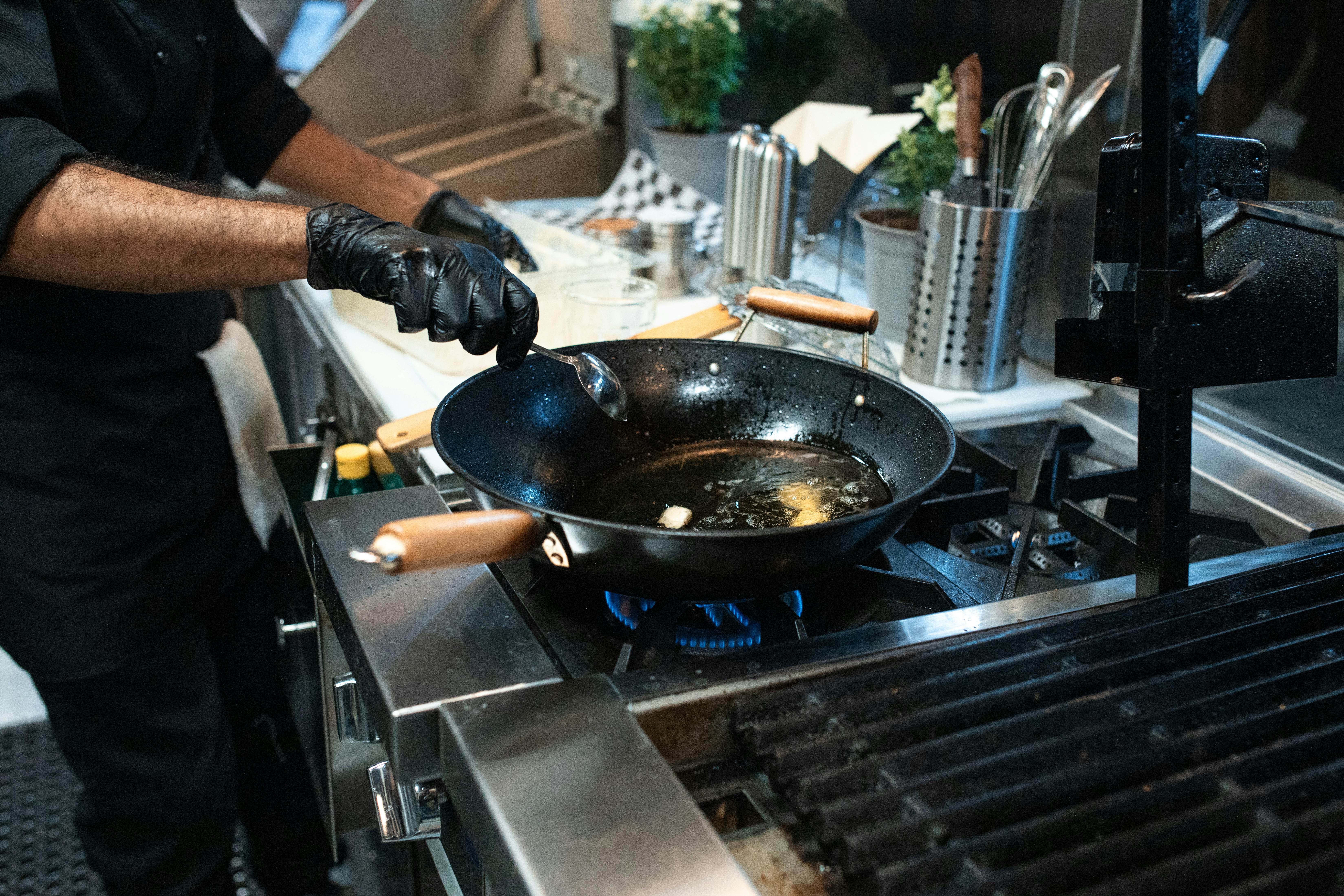
A diner line is typically organized around a flat top griddle, a fryer, a broiler or grill, and a cold station for salads and sandwich assembly.
Every menu item is a sequence of steps across those stations, and dishes are designed so that a single cook can run several orders in parallel.
Items that would require a separate technique or long unattended cooking are handled as daily specials or prepared in advance rather than cooked to order.
Prep work happens before service
Sauces, soups, batters, portioned proteins and cut vegetables are prepared during quiet periods, so service becomes assembly and finishing rather than cooking from scratch.
This is what allows a wide menu to be delivered quickly, since the time-consuming steps happened hours earlier.
It also sets the constraint on menu changes, because adding one genuinely new item can require its own prep, storage space and holding procedure.
The long menu is a customer strategy
Diners serve mixed groups at odd hours, and the breadth of the menu means a table with different preferences can all be satisfied in one place.
Serving breakfast at any hour works the same way, capturing shift workers and late diners without requiring a separate kitchen setup.
The result is high table turnover across a long operating day, which is the economic basis for a format with modest prices per plate.
Where the model shows strain
Wide menus increase inventory complexity, and items that sell rarely still occupy refrigerator space and eventually contribute to waste.
Operators manage this by ensuring rarely ordered dishes share ingredients with popular ones, so nothing sits in the walk-in for a single menu line.
Which is why menu additions at a diner tend to be new arrangements of existing components rather than genuinely new preparations.